
Through a Glass, Darkly
Mind without limits

I’ll start with an epistemological hypothesis that can’t be proven, but which I believe constitutes an inference to the best explanation. It goes back at least as far as William James, who speculated that the brain might be understood not as the originator of consciousness but rather as a receiver or filter. In his “transmission theory,” consciousness exists outside the nervous system, and the role of the brain is to translate the (nonphysical) signal of consciousness into electromagnetic impulses which, in turn, direct the body and allow it to navigate the physical world. To put it another way, the brain is a filter or funnel that reduces a vast sea of consciousness to manageable dimensions, so that brain and body are not overwhelmed.
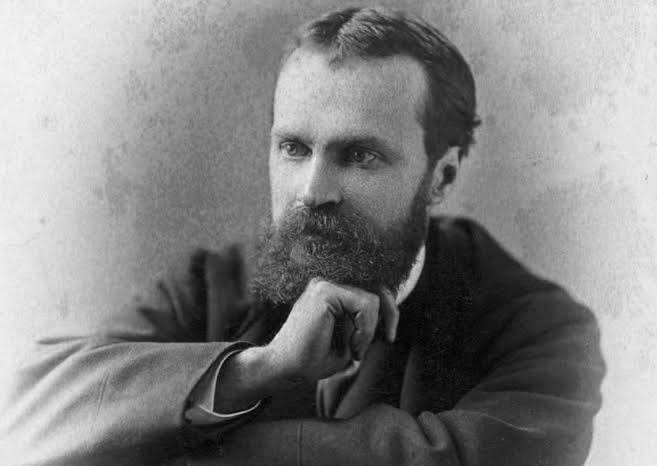
As James himself put it:
A medium … will show knowledge of his sitter’s private affairs which it seems impossible he should have acquired through sight or hearing, or inference therefrom. Or you will have an apparition of someone who is now dying hundreds of miles away. On the production theory [i.e., the view that the brain produces consciousness] one does not see from what sensations such odd bits of knowledge are produced. On the transmission theory, they don’t have to be “produced,” — they exist ready-made in the transcendental world, and all that is needed is an abnormal lowering of the brain-threshold to let them through.
I call this an inference to the best explanation because it covers a variety of observed facts that don’t fit neatly into the opposing physicalistic hypothesis (that the brain produces consciousness). For instance, there are well-studied cases of people who were deeply unconscious, or even flatlining, yet observed events taking place around them (or in rare cases, far away); these reported observations were later confirmed. There are also many cases on record of what William Maurice Bucke called “cosmic consciousness,” a sudden and temporary insight into the nature of reality that leaves a person stunned, overwhelmed, and permanently changed. Like James, I would also point to mediums like Gladys Osborne Leonard, Leonora Piper, and Eileen Garrett, who were studied for years, even decades, by serious investigators who did their best to eliminate the barest possibility of trickery; even so, these mediums consistently (though not invariably) produced detailed, verifiable information they had no normal way of obtaining. Whether we interpret these communications as evidence of dialogues with the deceased or as a super-heightened form of ESP, the phenomena can be explained only if consciousness is able to operate outside the brain.
Other lines of evidence could be cited: deathbed visions, which sometimes include visions of people not known to be dead at the time; crisis apparitions, the ghostly appearance of a person who died only hours or minutes earlier and whose death is as yet unreported; and children’s spontaneous recollections of past lives, which suggest either reincarnation or the ability to tap into an extracerebral memory bank akin to the Akashic Records.
What is interesting about these various lines of inquiry is that they suggest not only that consciousness can operate outside the brain, but that it operates at a significantly higher level. And this is precisely what we would expect if something like the transmission hypothesis is true. We would assume that our earthbound, physically limited consciousness would be inferior to the nonphysical, liberated consciousness we attain when we no longer have to filter out most of our awareness in order to accommodate physical constraints.
NDE perception
Heightened perception is common among people who’ve reported being out of the body during an NDE. Often these people describe their perceptions as “more real than reality.” Isn’t this exactly what we would expect if their ordinary earthly perception is restricted, while their discarnate perception is relatively unlimited?
Here are a few examples. (All quotes in this post, except the last two, are taken from my book Life & Afterlife. Specific citations can be found there. Bold emphases have been added by me.)
The first excerpt is the account of a person who nearly drowned. The others involve medical crises.
All of a sudden, I noticed a floating sensation, as if I were rising. I was shocked to find that I was floating upwards into the open air above the river. I remember vividly the scene of the water level passing before my eyes. Suddenly I could see and hear as never before. The sound of a waterfall was so crisp and clear that it just cannot be explained by words. Earlier that year, my right ear had been injured when somebody threw an M-80 into a bar where I was listening to a band, and it exploded right next to my head. But now I could hear perfectly clearly, better than I ever had before. My sight was even more beautiful. Sights that were close in distance were as clear as those far away, and this was at the same moment, which astounded me. There was no blurriness in my vision whatsoever. I felt as if I had been limited by my physical senses all these years, and that I had been looking at a distorted picture of reality.
***
I was hovering over a stretcher in one of the emergency rooms at the hospital. I glanced down at the stretcher, knew the body wrapped in blankets was mine, and really didn’t care. The room was much more interesting than my body. And what a neat perspective. I could see everything. And I do mean everything! I could see the top of the light on the ceiling, and the underside of the stretcher. I could see tiles on the ceiling and the tiles on the floor, simultaneously: three hundred degree spherical vision. And not just spherical. Detailed! I could see every single hair and the follicle out of which it grew on the head of the nurse standing beside the stretcher. At the time, I knew exactly how many hairs there were to look at. But I shifted focus. She was wearing glittery white nylons. Every single shimmer and sheen stood out in glowing detail, and once again, I knew exactly how many sparkles there were.
***
Although my physical eyes were closed, I seemed to be acutely aware of every minute detail that was taking place around me and beyond. The sharpness of my perception was even more intense than if I’d been awake and using my physical senses. I seemed to just know and understand everything—not only what was going on around me, but also what everyone was feeling, as though I were able to see and feel through each person ...
I began to feel weightless and to become aware that I was able to be anywhere at any time ... and this didn’t seem unusual. It felt normal, as though this were the real way to perceive things.
***
I looked up instead and, strangely enough, the roof was no longer there—I could see outdoors: my vision had somehow expanded and sharpened ... Everything was clear and beautiful.
I then came out of my body, not only into clear consciousness, but into a more intense livingness than anything I had previously experienced. There was an awareness of expansion, of immense well-being and clarity, of joy and meaning. I remember thinking, “If this is death, how wonderful, how easy, how natural.”
Professor Janice Holden distributed a questionnaire to people who had reported NDEs that included awareness of their physical surroundings. She received 63 replies, roughly three-quarters of which described panoramic, vivid, undistorted vision.
Cosmic Consciousness
Cosmic consciousness is, by definition, a state of vastly expanded awareness in which every aspect of reality is apprehended in detail all at once. These experiences never last for a lifetime, although their aftereffects usually do. Some cosmic consciousness episodes cover only a few minutes, while others cover a day or two, but all of them inevitably fade – just as we would expect if the brain filters out excess information in order to allow us to focus on mundane but essential earthly tasks.
Here is an example from Richard Maurice Bucke’s groundbreaking 1901 book, Cosmic Consciousness:
The light and color glowed, the atmosphere seemed to quiver and vibrate around and within me. Perfect rest and peace and joy were everywhere, and, more strange than all, there came to me a sense of some serene, magnetic presence — grand and all pervading. … I was seeing and comprehending the sublime meaning of things, the great truth that life is a spiritual evolution, that this life is but a passing phase in the soul’s progression. … I saw with intense inward vision the atoms or molecules, of which seemingly the universe is composed — I know not whether material or spiritual — rearranging themselves, as the cosmos passes from order to order. What joy when I saw there was no break in the chain — not a link left out — everything in its place and time. Worlds, systems, all blended in one harmonious whole. Universal life, synonymous with universal love!
In the morning I awoke with the spiritual sense so strong that what we call the actual, material things surrounding me seemed shadowy and unreal. This shadowy unreality of external things did not last many days.
After writing about his elaborate NDE in Proof of Heaven, neurosurgeon Eben Alexander started receiving letters and emails from people who’d had similar experiences. Here’s one:
I was coming back from court (I am still practicing law) heading toward my car. I specifically recall stepping on a crack in the cement sidewalk and (without warning nor explanation) I suddenly became completely aware that everything was absolutely okay. When I say “everything,” I mean everything in as expansive a term as anyone could imagine — including (as lawyers like to say) without limiting the generality of the foregoing, the past, present, future, the universe, the cosmos, all actions, all events, all circumstances that were, are or could ever be ... The feeling that everything in the universe was okay — exactly as it should be — was more true, more real, more direct than any experience I have ever had.
In Dying To Be Me, Anita Moorjani writes:
In the NDE state, however, I realized that every moment in all our lives — past, present, future, unknown, unknown, and unknowable — exist[s] simultaneously, as though outside of what we know as time. I became aware that I already was everything I was trying to attain, and I believe that’s true for everyone.

Mediumship
Purported communicators speaking through mediums often say they had to “lower their vibrations” (a rather obscure but intriguing phrase) and restrict their consciousness in order to transmit their messages through the medium’s brain and vocal cords. They sometimes describe their end of the process as diving into deep waters where the pressure is intense, leading to a degree of confusion and disorientation. This allegedly accounts for some of the misstatements and vagueness found in channeled accounts. Though it may seem overly convenient to ascribe a medium’s errors to this source, it is exactly what we would expect if the filter idea is correct.
Consider these words channeled by Alice Fleming (Rudyard Kipling’s sister, who used the pseudonym “Mrs. Holland”), purportedly originating with the deceased paranormal researcher F.W.H. Myers:
The nearest simile I can find to express the difficulties of sending a message — is that I appear to be standing behind a sheet of frosted glass — which blurs sight and deadens sound — dictating feebly — to a reluctant and very obtuse secretary. A feeling of terrible impotence burdens me — I am so powerless to tell what means so much — I cannot get into communications with those who would understand and believe me.
Speaking through a medium, a communicator purporting to be Sir William Barrett, an early investigator of deathbed visions, stated:
Sometimes I lose some memory of things from coming here; I know it in my own state but not here.
In dreams you do not know everything, you only get parts of the dream. A sitting is similar; when I go back to the spirit world after a sitting like this I know I have not got everything through that I wanted to say.
That is due to my mind separating again, the consciousness separating again. In the Earth body we have the separation of subconscious and conscious. Consciousness only holds a certain number of memories at a time. When we pass over they join, — make a complete mind that knows and remembers everything, but when one comes here to a sitting the limitation of the physical sphere affects one’s mind, and only a portion of one’s mind can function for the time being. When I withdraw from this condition [my] whole mind becomes again both subconscious and conscious; my subconscious mind encloses my conscious one and I become whole again mentally. … I cannot come with and as my whole self, I cannot ...
I have a fourth dimensional self which cannot make its fourth dimension exactly the same as the third. The fourth dimension is an extension—that is not the right way of saying it, but the only way I can say it. … I have left something of myself outside which rejoins me directly I put myself into the condition in which I readjust myself. …
When I come into the conditions of the sitting I then know that I can only carry with me — contain in me — a small portion of my consciousness.

A larger self
The reference by “Barrett” to a fourth-dimensional self puts me in mind of a quote from Arthur Schopenhauer in his book The World as Will and Idea.
What Kant says is in substance this: — “Time, space, and causality are not determinations of the thing-in-itself, but belong only to its phenomenal existence, for they are nothing but the forms of our knowledge. Since, however, all multiplicity, and all coming into being and passing away, are only possible through time, space, and causality, it follows that they also belong only to the phenomenon, not to the thing-in-itself. But as our knowledge is conditioned by these forms, the whole of experience is only knowledge of the phenomenon, not of the thing-in-itself; therefore its laws cannot be made valid for the thing-in-itself. This extends even to our own ego, and we know it only as phenomenon, and not according to what it may be in itself.”
Again, this idea is consistent with the hypothesis that consciousness exists in a vastly larger and more extended form outside the limitations of physical body and brain, and that temporary or permanent liberation from physical constraints will result — not in the extinction of consciousness — but in elevation to a higher and more comprehensive consciousness.
Or as St. Paul put it,
For now we see through a glass, darkly; but then face to face: now I know in part; but then shall I know even as also I am known.
Well done.
Thinking of my own personal experiences, three, possibly four over the last 70 years ... I particularly liked the following passage ...
"Cosmic consciousness is, by definition, a state of vastly expanded awareness in which every aspect of reality is apprehended in detail all at once. These experiences never last for a lifetime, although their aftereffects usually do."
The reason I resonated with that is because I remembered how little I could share of those brief experiences (for me, minutes at most), and with so few (if any) ... and because it put a quote I have often read into a good perspective ... 'If you meet a Buddha along the road, kill him.'
Even that simple quote can have several possible metaphorical meanings, but one that you reminded me of is that those moments of transcendental awareness are not an infinitely sustainable state of mind ... and anyone who claims it is, is either a charlatan or a bureaucratic functionary playing a role. Or both.
I would much rather trust an indigenous 'witch doctor' who is aware of the time, place, social dynamics (and possible 'herb') to help reach those moments than the long line of Elmer Gantry types that have performed their roles behind a mere mask of the infinite.